

A referral rewards program pays existing customers for bringing in new ones, usually splitting the reward between both sides. The default that holds up across most business models is a double-sided structure, with the reward tied to your product (account credit, extra usage, a free month) rather than raw cash whenever possible and sized against your actual LTV and CAC. Before you write a single line of share copy, do two things: run the LTV/CAC math to find your reward ceiling, then pick one high-intent placement, like the post-purchase confirmation screen, to launch it.
TL;DR:
- Referral programs are most profitable when rewards are tied to customer lifetime value and placed at high-impact moments like post-purchase screens.
- Using rewards that reinforce product engagement, such as points or product upgrades, often costs less and encourages long-term loyalty more than cash or gift cards.
- Proper rules, tracking, and compliance measures are essential to prevent fraud, gaming, and legal violations, especially under GDPR and FTC regulations.
- A double-sided structure that rewards both referrers and new customers outperforms one-sided programs by motivating immediate action.
- Ongoing promotion, segmentation, and reward tiering help maintain participation and prevent program fatigue over time.
Table of Contents
- Why a Referral Rewards Program Actually Works
- What Reward Types Work for Which Customers
- Choosing a Program Structure and Setting the Rules
- How to Size the Reward Without Wrecking Your Margin
- Building the Program: UX, Placement, and Tracking
- What to Measure and How to Improve It Over Time
- Keeping the Program Clean: Fraud and Disclosure Rules
- How ScriptNovaa Structures Its Points-Based Referral Rewards
- What GDPR and Privacy Rules Mean for Your Referral Program
- Getting the Word Out Once the Program Is Live
- Where Referral Programs Go Wrong (and How to Fix It)
- Tailoring Rewards to Different Customer Segments
- When Referrals Beat Paid Acquisition, and When They Don't
- Bring Points-Based Referral Rewards to Your Own Browser Sessions
- Sources
- FAQ
Why a Referral Rewards Program Actually Works
Referrals convert better than almost any other acquisition channel because they carry borrowed trust. A friend's recommendation skips the skepticism a paid ad has to fight through, and that trust shows up in the numbers on the back end, not just the click-through rate. HBR's analysis of customer referrals found that referred customers are more loyal and more profitable than customers acquired through other channels, and Wharton's longer-run research tracked referred customers holding higher lifetime value than non-referred ones across a six-year window. That's not a first-purchase bump. It's a durable difference in how long people stick around and how much they spend.
Referral programs work best under specific conditions, and it's worth being honest about when they don't. A business with a strong Net Promoter Score has customers who are already inclined to talk about the product; a referral program just gives them a reason and a mechanism. Subscription businesses and anything with repeat purchase behavior also do well here, because the program compounds: every new referred customer becomes a potential referrer themselves.
Three things kill referral programs before they get traction:
- Buried programs. If the offer lives on a forgotten settings page instead of the checkout confirmation or the app's home screen, nobody finds it.
- Rewards too small to bother sharing over. A $2 credit on a $200 product doesn't clear the mental bar for "worth telling a friend about."
- No product-market fit yet. Referral programs amplify what's already working. They don't fix a product people aren't excited about in the first place. Layering incentives on top of lukewarm satisfaction just burns budget on low-quality referrals.
The businesses that get this right treat the referral rewards program as an extension of the product experience, not a bolt-on marketing gimmick. That distinction shapes everything from reward type to where you place the invite.
What Reward Types Work for Which Customers
Not every reward motivates every customer, and picking the wrong type for your business model is one of the more expensive mistakes marketers make in this space. Cash and gift cards have near-universal appeal, they work across almost any audience, but they also carry the highest cost and the least connection back to your product. Discounts and store credit fit repeat-purchase retailers well because they nudge the customer toward a second transaction instead of just handing them money and hoping they come back. Points, product upgrades, or extended access work best for subscription and digital products, where the marginal cost of the reward is low and the reward itself reinforces continued use.
Here's a rough breakdown of how reward types map to operational complexity and cost:
- Cash payouts are simple to explain but expensive to run at scale, and they require payment processing infrastructure most small teams underestimate.
- Gift cards split the difference. They feel like cash to the recipient but cost you less per dollar of perceived value, and delivery is easier to automate through third-party APIs.
- Discounts and account credit are cheap to fulfill and keep the transaction inside your own ecosystem, but they only work if the customer plans to buy again soon.
- Points or token systems cost you the least per referral and can be redeemed for a range of perks, which makes them flexible, though they require the customer to understand and trust the points economy you've built.
- Product upgrades or free months cost you close to nothing in cash terms if you have spare capacity (storage, seats, features), and Dropbox's referral program is the textbook example of this working at scale, since giving away extra storage cost Dropbox almost nothing while making the product itself more useful to the referrer.
The trade-offs come down to three variables: cost, redemption friction, and abuse potential. Cash is high cost, low friction, and moderate abuse risk (people will create fake accounts for a check). Points systems are low cost, moderate friction (people need to learn the system), and lower abuse risk if you gate redemption behind account verification. Discounts sit in the middle on all three.
Pro Tip: Match the reward to the behavior you actually want. If you want more usage, reward with usage (extra storage, more seats, more credits). If you want more transactions, reward with a discount on the next one. Cash rewards the referral itself and nothing else, which is why it's often the least strategic option even though it's the easiest to explain.
Extole's research on incentive structures backs this up: double-sided programs that reward both the advocate and the friend consistently outperform one-sided setups, largely because the new customer gets a reason to say yes immediately instead of just trusting a stranger's endorsement.
Choosing a Program Structure and Setting the Rules
Most referral programs fall into one of four structures, and picking the wrong one for your business stage is a common source of underperformance. A one-sided program rewards only the person who refers, which is cheaper to run but gives the new customer no incentive to actually convert. A double-sided program, "give $10, get $10" being the classic form, rewards both people, and it's the structure most marketers should default to. It reduces friction for the new customer and gives them an immediate reason to act rather than relying purely on trust in their friend's opinion.
Tiered, milestone, and gamified structures make sense once you have a base program running and want to squeeze more out of your most active advocates. A tiered structure increases the reward as someone refers more people (first referral gets $10, fifth referral gets $25), which keeps your top promoters engaged rather than stopping after one successful share. Milestone rewards work similarly but attach to specific counts (refer 3 friends, unlock a bonus tier). Gamified structures add leaderboards, badges, or progress bars, which work well for younger or highly engaged user bases but can feel gimmicky in B2B or professional-services contexts.
Before launch, lock down your eligibility rules. Vague terms create both fraud exposure and customer service headaches down the line.
- Define what counts as a qualifying referral: a new customer, a new account, or a specific action like a first purchase over a minimum threshold.
- Set a minimum qualifying action so referrals that sign up but never purchase don't trigger a payout. Requiring a completed transaction, not just a signup, filters out low-quality referrals early.
- Tie payout timing to your return or refund window. If your return policy is 30 days, don't release the reward until that window closes. This single rule prevents a meaningful share of gaming attempts, where someone refers themselves, claims the reward, then returns the product.
- Decide whether existing customers can refer each other or only new-to-brand customers qualify, since B2B referral programs especially need to define this to avoid internal gaming between departments of the same company.
- Set an expiration window on unredeemed rewards, both to manage your liability and to create urgency for redemption.
None of these rules need to be complicated, but they all need to be written down and visible before launch, not improvised after the first fraud attempt surfaces.
How to Size the Reward Without Wrecking Your Margin
The math here isn't complicated, but skipping it is how referral programs quietly become unprofitable. Start with your customer lifetime value (LTV) and customer acquisition cost (CAC) for your existing channels. Your referral reward should sit comfortably below what you'd otherwise spend to acquire a customer through paid channels, and ideally well under the gross margin that customer generates.
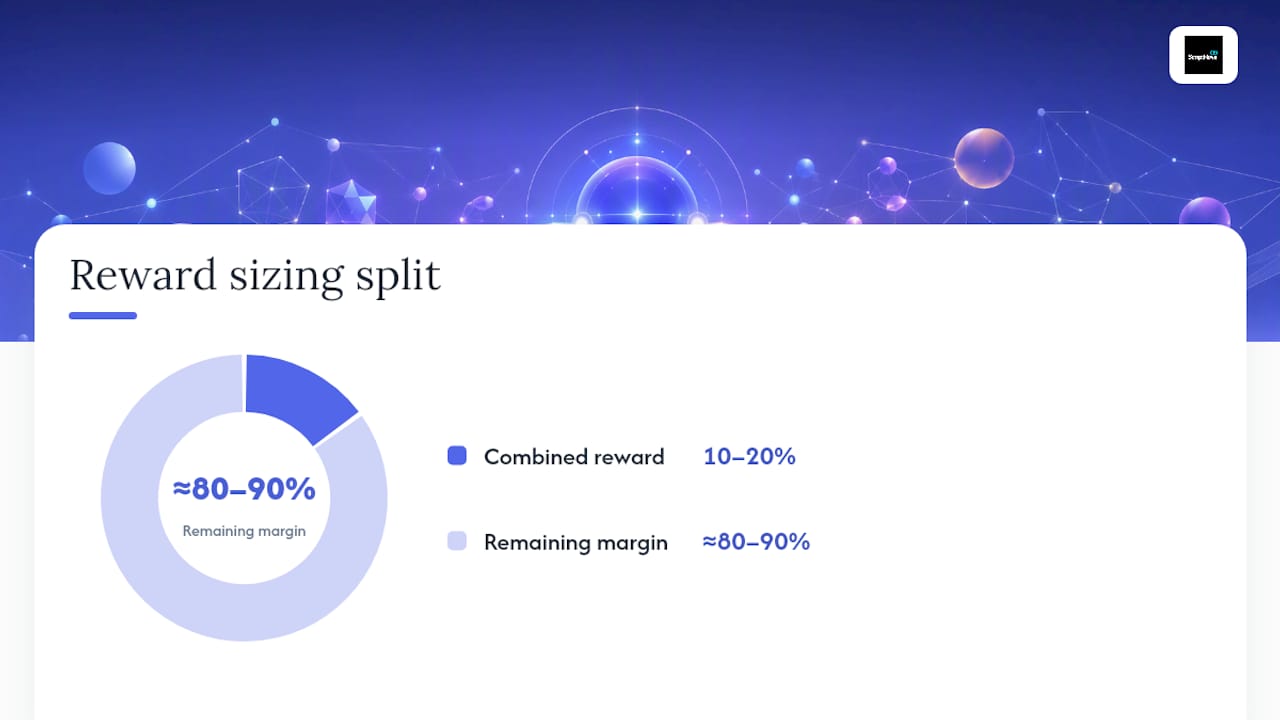
A widely used rule of thumb, and one echoed across WordStream's referral marketing guidance, is to keep the total reward (both sides combined, if double-sided) under roughly a low double-digit percentage of the gross margin you expect from that referred customer. Go higher than that only if you have a specific strategic reason, like a land-grab phase where market share matters more than near-term margin.
Here's the formula in plain terms: take your average gross margin per customer, multiply by 0.10 to 0.20, and that's your reward ceiling. If your average customer generates substantial gross margin over their first year, your combined reward budget tops out at a fraction of that margin.
Two quick examples show how differently this plays out by business type:
That's why low-ticket ecommerce brands lean on small discounts or store credit rather than cash. A $10 cash reward on a low-margin order would blow past any reasonable ceiling.
That's enough room for a genuinely compelling double-sided offer, like $50 off for the new customer and $50 in account credit for the advocate, with margin to spare.
Run this math before you pick a reward number, not after. It's the difference between a referral program that scales profitably and one that quietly erodes your margins every time it succeeds.
Building the Program: UX, Placement, and Tracking
A referral program lives or dies on how easy it is to find, share, and track. Get these four pieces right and most of the operational headaches disappear before they start.
- Build a simple dashboard with a unique referral link or code per customer. This is non-negotiable for attribution. Without a unique identifier tied to each customer, you can't credit the right person or prevent duplicate claims.
- Pre-write share copy that includes disclosure language. Don't leave customers to improvise their pitch, and don't skip the disclosure that they're receiving a reward for the referral. More on why that matters in the compliance section below.
- Design a clear redemption flow that shows the customer their reward status without them having to email support to check. Ambiguity here is one of the top drivers of support tickets in referral programs.
- Surface the invite at high-intent moments, not buried in account settings. WordStream's placement research points to post-purchase confirmation screens, in-app widgets, NPS survey follow-ups (especially after a promoter score), and customer support interactions as the highest-converting spots to introduce the program.
On the tracking side, most programs rely on unique links or codes with UTM-style parameters, paired with a cookie window (commonly 30 to 90 days) that credits the referrer if the friend converts within that period. Cross-device attribution is the trickiest part here: someone might click a referral link on their phone but complete the purchase on a laptop later, and basic link tracking alone won't catch that. Account-based matching (email or login match) closes some of that gap, but it requires the new customer to identify themselves early in the funnel.
For fulfillment, you're choosing between building tracking and payout logic yourself or using a dedicated platform. Yotpo's guidance on referral program mechanics recommends dedicated referral platforms for brands that need to scale, since manual tracking and payout in a spreadsheet breaks down fast once you're past a few hundred referrals a month. If you're under that volume, a lightweight DIY setup with a coupon-code system and manual review can work fine as a starting point, but plan your migration path before volume forces the issue.
What to Measure and How to Improve It Over Time
Five numbers tell you whether your referral program is actually working. Participation rate is the share of your customer base that has ever made a referral; low participation usually points to a discoverability problem, not a reward problem. Share-to-conversion rate measures how many shared links actually turn into new customers, and a reasonable range to expect here runs from about 10% to 25%, though this varies heavily by product and audience. Referral CAC is your total reward spend divided by the number of new customers acquired through the program, and it should sit well below your blended CAC across other channels. Referred LTV tracks whether referred customers stick around longer or spend more, and this is where the earlier LTV uplift figures from HBR and Wharton become your benchmark, not just an interesting stat. K-factor, the average number of new users each existing user brings in, tells you whether the program is compounding or flat.
- Track participation rate weekly during launch, then monthly once the program stabilizes.
- Segment share-to-conversion by placement (post-purchase vs. in-app vs. email) to find your best-performing channel.
- Compare referral CAC against blended CAC every quarter, and cut or adjust the reward if referral CAC creeps upward.
- Watch referred LTV over a longer horizon (the Wharton data reflects results over roughly six years), since short-term LTV comparisons can be misleading.
Pro Tip: Run A/B tests on the ask, not just the reward. Testing "Give $10, Get $10" against "Give a free month, get a free month" often reveals more about what actually motivates your specific customer base than testing $10 against $15.
Test one variable at a time: reward amount, reward type, placement, or share copy. Running all four at once makes it impossible to know what moved the needle.
Keeping the Program Clean: Fraud and Disclosure Rules
Referral programs attract abuse the moment real money or meaningful value is on the line, and the common patterns are predictable enough to plan around. Self-referral, where someone creates a second account to refer themselves, is the most frequent one. Coupon-site leakage happens when referral codes get posted publicly on deal forums instead of shared person-to-person, diluting the "trusted recommendation" value entirely. Bot-driven signups target programs with weak verification, generating fake accounts purely to trigger payouts.
A handful of operational controls handle most of this:
- Delay payouts until after the return or refund window closes, which removes the incentive to refer, collect the reward, then cancel or return the purchase.
- Verify new accounts with basic checks like email confirmation or a minimum account age before releasing any reward.
- Cap rewards per customer over a given period to limit the damage from any single bad actor gaming the system at scale.
- Rate-limit referral link generation so one account can't mass-produce codes for distribution on coupon sites.
On the compliance side, the FTC's Endorsement Guides require clear and conspicuous disclosure whenever someone receives a reward for recommending a product, and WordStream's compliance notes flag that enforcement activity around this has increased. The fix is simple: bake the disclosure directly into your pre-written share copy ("I get a reward if you sign up using my link") so customers aren't left guessing whether they need to say anything, and you're not relying on them to self-police a legal requirement.
How ScriptNovaa Structures Its Points-Based Referral Rewards
Points and token systems solve a real problem in referral program design: cash and gift cards cost real money on every single conversion, while points cost you fractions of a cent to issue and only convert to real value when redeemed for something you already control.
The platform runs on a model where users earn points through referrals, sponsored link visits, and product usage, and those points convert into browser session tokens rather than cash payouts. That structure keeps the reward tied to product engagement, similar in spirit to how a free storage upgrade rewarded Dropbox referrers with more of the product itself instead of a check. The points system documentation breaks down exactly how points accumulate and convert, which matters if you're evaluating token based systems as a model for your own program.
A points economy turns every successful referral into deeper product engagement instead of a one-time cash transaction. The referrer earns points they'll actually use inside the product, which keeps them coming back long after the referral itself is done.
For teams building something similar, a few patterns from this approach translate well: use tokens or points as the primary reward currency to avoid cash-handling overhead, offer beta perks or early access as a mid-tier reward for more active referrers, and set clear redemption windows so unused points don't sit as an indefinite liability on your books. The feature set shows how points, referrals, and product access tie together in one system rather than living as separate bolted-on programs.
What GDPR and Privacy Rules Mean for Your Referral Program
FTC disclosure covers whether customers know a reward is involved. It says nothing about how you're allowed to handle the data your referral program collects, and that's a separate legal problem, especially if any of your customers or referred contacts are in the EU or UK.
Under GDPR, when a customer submits a friend's email address to send a referral invite, that friend's personal data is now being processed, and you need a lawful basis for it. Most referral programs rely on the referrer's action as implied consent for one contact attempt, but that consent doesn't extend to adding the friend's email to a marketing list if they don't convert. Sending unsolicited marketing to someone who never signed up themselves, just because a friend referred them, is one of the more common GDPR violations tied to referral programs.
Practical steps that keep you on the right side of this: only use the referred contact's information for the single referral invitation itself, delete it from your systems if they don't convert within a defined window, and never add non-converting referred contacts to your general marketing list without separate, explicit opt-in. If you operate in the US only, GDPR technically doesn't apply, but similar state-level privacy laws (California's CCPA among them) impose comparable restrictions on using someone else's data without their direct consent. Build your referral data-handling policy assuming the stricter standard applies, since retrofitting compliance after a program is already collecting data is far more expensive than designing it in from the start.
Getting the Word Out Once the Program Is Live
Building the program is half the work. The other half is making sure customers actually notice it exists, and this is where most referral programs quietly underperform relative to their potential.
Email remains one of the highest-converting channels for referral promotion, particularly a dedicated launch announcement followed by periodic reminders to customers who haven't yet participated. Pair that with in-app or on-site placements at moments when a customer has just had a good experience, right after a purchase confirms, right after a support ticket resolves well, right after an NPS survey where they scored you as a promoter.
Social proof helps more than most marketers expect. Showing a running count of successful referrals or a testimonial from a customer who's earned a meaningful reward gives new participants a reason to believe the program is real and worth their time. Segmented outreach also pays off: your most loyal, longest-tenured customers are statistically your best potential advocates, so a targeted email campaign to that segment specifically, rather than a blanket announcement to everyone, tends to produce a higher initial participation rate.
Don't treat the launch as a one-time announcement. Referral programs need periodic re-promotion, seasonal pushes, reminder emails to non-participants, refreshed placements, because customer attention is short and yesterday's announcement is already forgotten by most of your base.
Where Referral Programs Go Wrong (and How to Fix It)
Most referral programs don't fail because the concept is broken. They fail because of a handful of avoidable execution mistakes that show up again and again.
Low awareness is the most common one. A program that exists but isn't surfaced at the right moments will underperform no matter how generous the reward is. The fix is placement, not incentive size: put the invite in front of customers right after a positive experience, not buried three menu levels deep in account settings.
Reward fatigue sets in when a flat, unchanging offer stops motivating your most active advocates over time. Introducing tiered rewards or occasional limited-time bonus periods keeps engagement from flattening out.
Poor tracking creates disputes over who referred whom and erodes trust in the program itself. This almost always traces back to skipping unique link infrastructure in favor of a manual honor-system approach.
Fraud and gaming drain budget on illegitimate referrals if verification and delayed payouts aren't in place from day one, not added after the first abuse pattern surfaces.
Treating it as a one-time launch rather than an ongoing program is maybe the most underrated failure mode. Referral programs that get promoted once and then left alone see participation decay steadily, while programs that get refreshed, re-promoted, and iterated on quarterly maintain momentum far longer.
Tailoring Rewards to Different Customer Segments
A single reward structure rarely fits your entire customer base equally well, and segmenting your referral incentives by customer type usually lifts both participation and program economics.
High-value or long-tenured customers often respond better to status-oriented rewards, early access to new features, a recognized "top referrer" badge, exclusive perks, rather than a fixed cash amount that feels small relative to what they've already spent with you. Price-sensitive or newer customers, on the other hand, tend to respond more strongly to straightforward discounts or credit on their next purchase, since the value is immediate and easy to understand.
B2B referral programs benefit from a different structure entirely: rewarding a referring company (or its point of contact) with account credit, extended contract terms, or added seats tends to work better than cash, partly because many B2B buyers can't personally accept cash incentives under their own company's compliance policies.
For subscription products specifically, offering free months or tier upgrades as the reward keeps the incentive inside your own ecosystem, reinforcing usage rather than paying out value that has nothing to do with the product itself. Segmenting by usage level also helps: your heaviest users are often your best potential advocates, and a slightly richer reward tier reserved for top-quartile users by usage or spend can meaningfully lift referral volume from exactly the customers whose referrals tend to convert and retain best.
When Referrals Beat Paid Acquisition, and When They Don't
Referral programs work best as a complement to paid acquisition, not a replacement, and the trade-off comes down to timing and signal strength. When your Net Promoter Score is solidly positive and you're seeing organic word-of-mouth already happening without any formal program, that's the moment to build the infrastructure to capture and reward it. You're not creating demand from nothing. You're giving an existing behavior a channel and a reason to scale.
Paid acquisition still wins when you need predictable, controllable volume on a specific timeline, something referrals can't promise since they depend on your existing customers' willingness to act. Referrals also struggle before product-market fit is clear. If customers aren't yet enthusiastic enough to recommend you unprompted, no reward size fixes that; you'd just be paying people to make a lukewarm recommendation, which tends to bring in equally lukewarm new customers.
Two quick scenarios make the trade-off concrete. A subscription app with strong retention and a growing base of unprompted App Store reviews should launch a referral program now. It has product-market fit; a program mainly needs to formalize a channel that's already forming. A newly launched product still iterating on core features every few weeks should hold off and lean on paid channels instead, since a referral program built on shaky product-market fit tends to reward noise instead of genuine advocacy.
— David
Bring Points-Based Referral Rewards to Your Own Browser Sessions
If you've been weighing whether to build referral tracking and reward fulfillment from scratch or lean on a system that already handles points, tokens, and redemption, ScriptNovaa's Share Browser gives you that infrastructure without the cash-handling overhead a traditional cash or gift-card program carries.
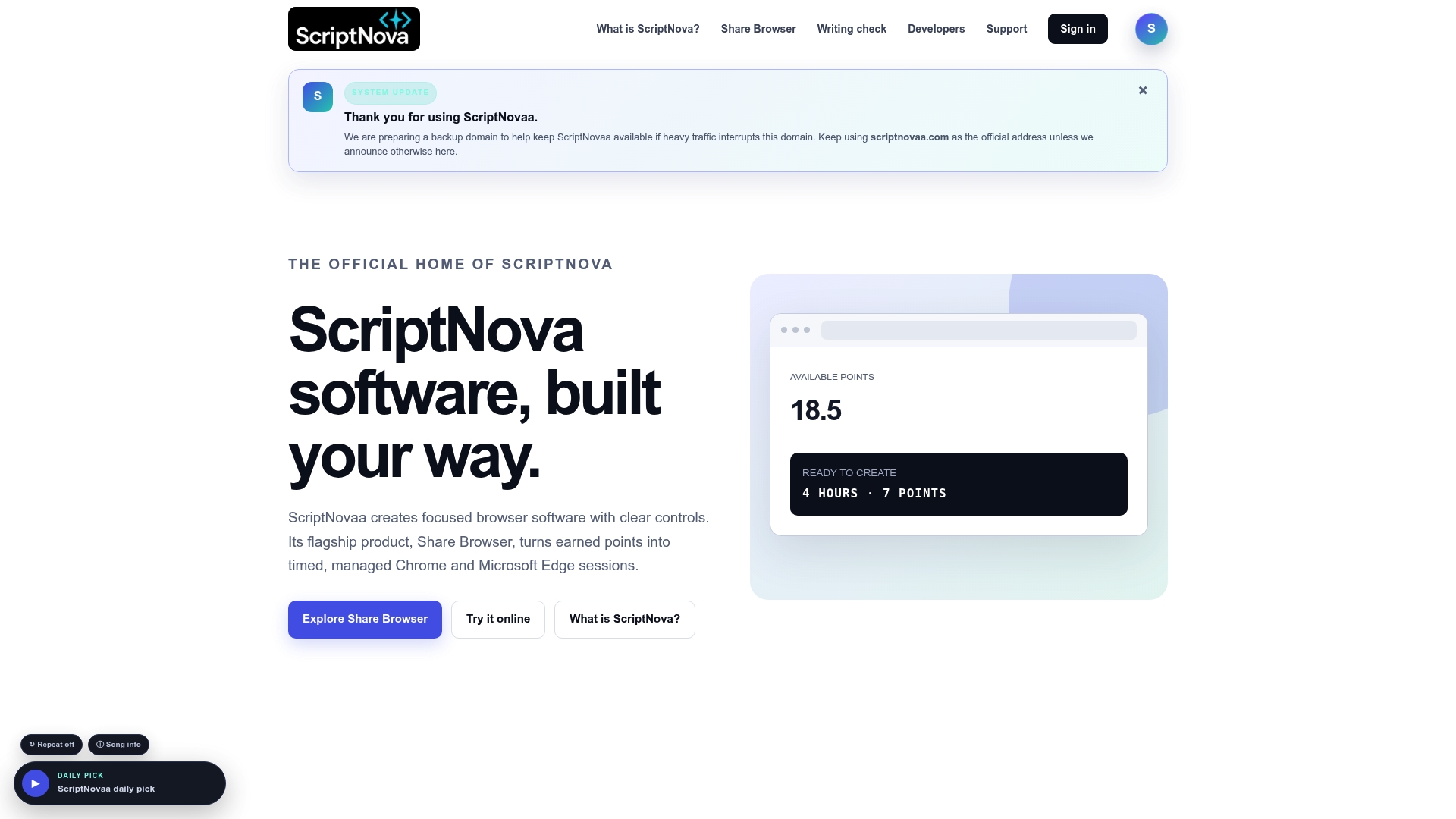
Share Browser runs on the same points and token model discussed earlier: referrals, sponsored link visits, and product usage all feed into a points balance that converts into managed browser session access, so every reward stays tied to actual product engagement rather than a one-time payout. That structure is worth exploring if you're designing a referral rewards program for a digital product and want to avoid the margin drag of cash incentives. Visit the Share Browser product page to see how the points and session model works, or try the online demo to see the referral and points flow in action before deciding whether this model fits your own program design.
Sources
- Why customer referrals can drive stunning profits | HBR
- Referral Marketing Guide: Strategies, Examples, & Free Tools | WordStream
- How to Choose the Best Referral Incentives (With Examples) | Extole
- How Do Referral Programs Work? A Guide To Growth | Yotpo
FAQ
Which apps actually pay real money for referrals?
Apps and platforms with cash or gift-card based referral rewards typically pay out through direct deposit, PayPal, or gift cards once a referred signup completes a qualifying action, though many digital products, including points-based systems like ScriptNovaa's, pay in redeemable credits or tokens instead of cash.
What is the best structure for a referral rewards program?
A double-sided structure, rewarding both the referrer and the new customer, generally outperforms one-sided programs because it gives the new customer an immediate incentive to convert rather than relying solely on trust in the recommendation.
How do I get paid to refer people to a company?
Sign up for the company's referral program, get your unique referral link or code, share it with contacts, and you'll typically receive your reward (cash, credit, or points) once your referral completes a qualifying purchase or signup, usually after any return window closes.
How should businesses reward employees for referrals?
Employee referral bonuses commonly get structured as a cash payout tied to the referred candidate completing a probationary period, which mirrors the delayed-payout logic used in customer referral programs to confirm the referral was a genuine, lasting fit.